
“When I saw the needle, I thought: yikes! But I didn’t feel a thing.”
Manuela Frey, blood donor and model“When I saw the needle, I thought: yikes! But I didn’t feel a thing.”
Manuela Frey, blood donor and model
Many people don’t know what to expect when they go to donate blood. Like Manuela Frey, when she sat down in the chair. The initial trepidation she felt when she saw the needle was swiftly pushed aside by the realisation that she barely felt it going in, and just ten minutes later, her donation was in the bag. Personal experiences attest to how simple the act of donating blood actually is – and to the big impact that a small amount of time spent doing something for someone else can have.
Blood donation remains a key pillar of the medical care system in Switzerland. It secures the availability of blood products needed every day in the country’s operating theatres, oncological clinics and emergency wards. The World Health Organisation defines blood products as essential medicines, in other words medicines that satisfy the basic healthcare and treatment needs of a population. Regular donations and a broad donor base are necessary so that the needs for blood can be met at all times. First-person accounts like that of Manuela Frey, who shared her experience with her community, help reduce people’s hesitancy and reach new donor groups. Likewise, digital offerings help people to learn more about blood donation and make it easy to schedule an appointment, strengthening the long-term security of the blood supply.
The blood supply was, for the most part, stable throughout the year.
There were occasional shortages in individual regions, particularly in the summer and over the holidays at the end of the year. In addition, data from the Swiss blood transfusion services indicate that stocks of Rh1-negative red cell concentrates (erythrocytes) run low on multiple occasions per year. That these developments could be dealt with effectively is thanks to the tremendous dedication of the regional blood transfusion services (with their targeted regional appeals and awareness-raising campaigns), to the recommendations on the handling of Rh1-negative blood products, drawn up in 2025, and above all, the altruism of donors.
Blood product demand and usage
Red cell concentrates: −1,6 % (previous year: −3.6 per cent)
Thrombocyte concentrates: +3,9 % (previous year: −5.3 per cent)
Plasma: −5,2 % (previous year: +4.0 per cent)
→ Demand decreased overall thanks to more efficient usage in hospitals.
Blood drives (mobile)
Communities: 1'037 (previous year: 1,041)
Mobile drives: 2'119 (previous year: 2,120)
Average donations per drive: 59,8 (previous year: 60.4)
Donations from mobile drives as percentage of total donations: 49,7 % (previous year: 49.2 per cent)
→ Stable levels of donation drives and blood donations.
Number of units donated and expiration rate
Units of blood collected: 252'703 (previous year: 260,349)
Expiration rate, red cell concentrates: 1,19 % (previous year: 1.31 per cent)
→ A slight decline in wastage
Shelf-life
Red cells: 42–49 days
Thrombocytes: 7 days
Plasma: up to 2 years (deep frozen)
The slogan #FillTheGap was used to help raise awareness of the importance of blood donation medical care in Switzerland on World Blood Donor Day, 14 June 2025. Around 700 blood donations are needed every day in Switzerland to ensure the reliable supply of blood and blood products for patients. Yet only around 2.5 per cent of the population donates blood regularly.
A diverse group of forty-five partners took part in the national campaign. The high level of commitment and increased visibility led to a very positive response. World Blood Donor Day 2025 clearly showed that collective responsibility is the basis for a stable blood supply. In view of its success, the campaign will be continued in 2026.
The UEFA Women’s 2025 European Championship was held in Switzerland, and the #FillTheGap slogan was adapted to suit the occasion – through the incorporation of a football motif. A specially created ad was broadcast during the breaks at public viewings; the advertising slots were made available at no charge. The campaign reached a wide public and made it clear that each and every blood donation helps fill gaps in the supply.
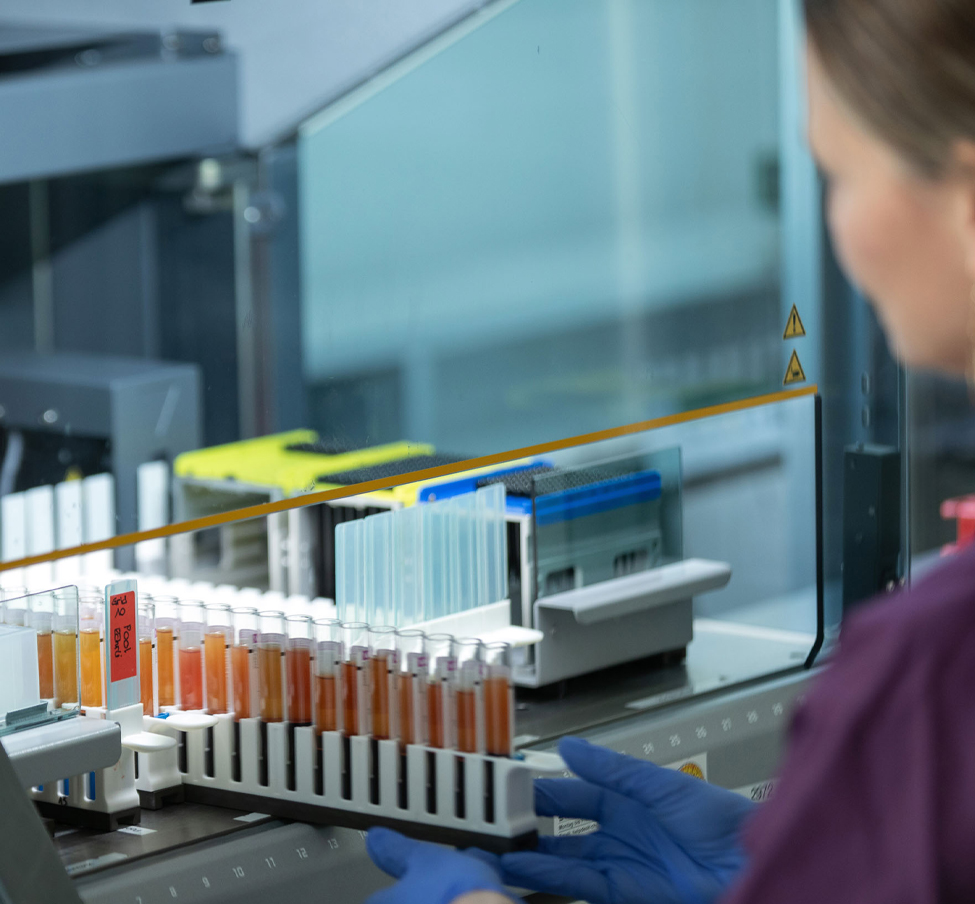
At their annual meeting, the presidents of the Regional Blood Transfusion Services discussed forecasts for the market for labile blood products over the next years. The projections are based on current data, international trends and the existing supply structures.
The per capita demand for red cell concentrates is falling, despite the aging population. Specific factors driving this trend are patient blood management and more efficient clinical use. The assumption is that the margin of fluctuation in demand will remain moderate for the next ten years.
The demand for thrombocyte concentrates has remained largely stable across all European countries and is strongly influenced by the respective clinical practices.
Demand for fresh frozen plasma is clearly falling due to the availability of alternative products and the revision of the relevant indications, and this trend is expected to continue. The markets for fractionated plasma, on the other hand, are substantially more dynamic; in Switzerland though, this market is limited to the supply of surplus plasma.
While the donor population remains stable in terms of donor numbers, the number of donations per donor has fallen. At the same time, the effort required to procure sufficient donated blood is increasing, in part due to the change in donation behaviour, the drop in the number of units donated per drive and a decline in the support provided by volunteers.
Automation, new regulatory requirements and cost pressures are resulting in the need for more investments paired with decreasing value creation in the laboratory and testing sector. The number of service providers is expected to continue to fall. Similar trends can be seen in the production sector, which still depends, to a great degree, on manual labour, despite some automation in individual instances.
Ensuring the acquisition and retention of qualified, skilled personnel continues to be a key priority. The blood transfusion services must compete with hospitals, laboratories and industry for qualified personnel. The importance of attractive employment conditions continues to increase.
Digitalisation offers potential for greater efficiency and synergies, particularly in the area of donor communication and IT systems along the chain of processes from donation to transfusion. At the same time, it requires coordination, investment and decisions on systems with long-term implications.
Based on these expected developments, the presidents identified possible joint measures which must now be elaborated more fully.
As of 1 August 2025, Anita Tschaggelar handed over leadership of the Blood Transfusion Service (BTS) to Tiziana Janner, who now bears overall responsibility for all activities in the core area of the blood supply, including serving on the Management Board. This step marked the conclusion of the succession planning for the leadership of the BTS.
The organisation wishes to take this opportunity to express its gratitude to Anita Tschaggelar, who shaped the BTS for many years, heading up the division for ten of them. During this period, she guided the BTS’s development, positioning it as a highly capable specialised unit, as seen from both inside and outside the organisation.
Anita Tschaggelar’s relationship with the BTS has not ended; she will continue to support the division until her retirement at the end of July 2026.
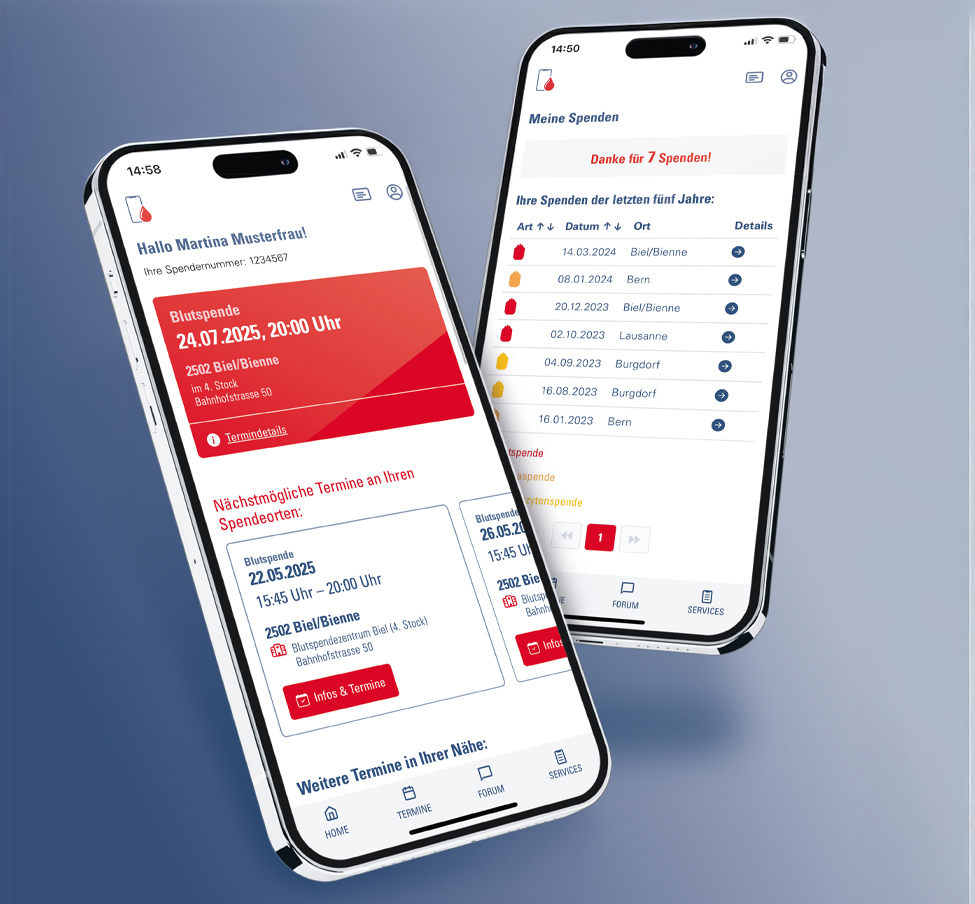
Another step facilitating digital donor communication was taken in 2025 with the launch of the app “Meine Blutspende” (My Blood Donation). The app was originally introduced by the Interregional Blood Transfusion Service SRK (IRB). The app is scheduled to go live for the other regional blood transfusion services in 2026.
The app offers blood donors a central access point for personal donation data, an overview of appointments and information of relevance to blood donation. Donors can see the dates of their previous donations, schedule new appointments and learn about the waiting periods that apply after travel or vaccinations. The digital blood donor card simplifies the process of registering at a blood collection site; the reminder function and information offerings help donors prepare for their donation.
The blood donation app helps simplify processes and creates a modern communication channel for contacts between donors and the blood transfusion services. It supplements the existing range of services and supports efforts to secure the long-term blood supply by making it easier to get in touch with and provide support for donors.
The annual meeting of the European Blood Alliance (EBA), the network of European blood transfusion services, was held in Basel in 2025. The meeting was jointly organised by Swiss Transfusion SRC and the EBA. A total of 45 specialists from 22 countries attended the meeting and, among other things, gained an insight into the processes at the Basel Blood Transfusion Center.
The meeting’s focus was on current European developments in the area of blood transfusion. In particular, the attendees discussed the new EU regulation on substances of human origin. In this context, it emerged that the current Swiss rules are stricter in some areas than those in the new European regulation.
Other topics discussed included European cooperation projects for research in transfusion medicine, improved networking of data and securing the supply of important blood products. Also discussed was the increasing role of mosquito-borne viral infections, which are relevant to the safety of the blood supply.
The meeting underlined the significance of cooperation at the European level for quality, security and a stable blood supply.